


12622 Résultats
Niveau de description archivistique:
Projet
Projet
Titre:
Sheffield Festival
Sheffield Festival
Numéro de référence:
AP144.S2.D61
Description:
File documents an unrealized project for the Sheffield Festival which was organized by the University of Sheffield Union of Students, in Sheffield, England, United Kingdom. An early proposal by Feliks Topolski and Cedric Price called for lightweight and movable gem-shaped enclosures of metal tubing, and fibreglass panels to be illustrated by Topolski. Later proposals involved the participation of Richard Hamilton, Robyn Denny, Bernard Cohen, and Joe Tilson. Material in this file includes conceptual sketches, detail sketches of support system, reprographic copies from original drawings, and photographic views of a model. Some material in this file was published in Price, Cedric, with Peter Murray. 'The Second Instalment in the Cedric Price Supplement Series', 'Architectural Design', vol. 41, (January 1971), 38. Feliks Topolski and Cedric Price also collaborated on a later project (see Topolski/Waterloo AP144.S2.D88). Material in the file was produced between 1964 and 1968. File contains conceptual drawings, photographic materials, and textual records.
AP144.S2.D61
Description:
File documents an unrealized project for the Sheffield Festival which was organized by the University of Sheffield Union of Students, in Sheffield, England, United Kingdom. An early proposal by Feliks Topolski and Cedric Price called for lightweight and movable gem-shaped enclosures of metal tubing, and fibreglass panels to be illustrated by Topolski. Later proposals involved the participation of Richard Hamilton, Robyn Denny, Bernard Cohen, and Joe Tilson. Material in this file includes conceptual sketches, detail sketches of support system, reprographic copies from original drawings, and photographic views of a model. Some material in this file was published in Price, Cedric, with Peter Murray. 'The Second Instalment in the Cedric Price Supplement Series', 'Architectural Design', vol. 41, (January 1971), 38. Feliks Topolski and Cedric Price also collaborated on a later project (see Topolski/Waterloo AP144.S2.D88). Material in the file was produced between 1964 and 1968. File contains conceptual drawings, photographic materials, and textual records.
Personnes et institutions:
Date:
1964-1968
1964-1968
Titre:
Sheffield Festival
Actions:
AP144.S2.D61
Description:
File documents an unrealized project for the Sheffield Festival which was organized by the University of Sheffield Union of Students, in Sheffield, England, United Kingdom. An early proposal by Feliks Topolski and Cedric Price called for lightweight and movable gem-shaped enclosures of metal tubing, and fibreglass panels to be illustrated by Topolski. Later proposals involved the participation of Richard Hamilton, Robyn Denny, Bernard Cohen, and Joe Tilson. Material in this file includes conceptual sketches, detail sketches of support system, reprographic copies from original drawings, and photographic views of a model. Some material in this file was published in Price, Cedric, with Peter Murray. 'The Second Instalment in the Cedric Price Supplement Series', 'Architectural Design', vol. 41, (January 1971), 38. Feliks Topolski and Cedric Price also collaborated on a later project (see Topolski/Waterloo AP144.S2.D88). Material in the file was produced between 1964 and 1968. File contains conceptual drawings, photographic materials, and textual records.
Sheffield Festival
Actions:
AP144.S2.D61
Description:
File documents an unrealized project for the Sheffield Festival which was organized by the University of Sheffield Union of Students, in Sheffield, England, United Kingdom. An early proposal by Feliks Topolski and Cedric Price called for lightweight and movable gem-shaped enclosures of metal tubing, and fibreglass panels to be illustrated by Topolski. Later proposals involved the participation of Richard Hamilton, Robyn Denny, Bernard Cohen, and Joe Tilson. Material in this file includes conceptual sketches, detail sketches of support system, reprographic copies from original drawings, and photographic views of a model. Some material in this file was published in Price, Cedric, with Peter Murray. 'The Second Instalment in the Cedric Price Supplement Series', 'Architectural Design', vol. 41, (January 1971), 38. Feliks Topolski and Cedric Price also collaborated on a later project (see Topolski/Waterloo AP144.S2.D88). Material in the file was produced between 1964 and 1968. File contains conceptual drawings, photographic materials, and textual records.
Niveau de description archivistique:
File 61
File 61
Date:
1964-1968
1964-1968
Personnes et institutions:
Classification:
expositions
expositions
Titre:
L’idée du pénitencier
L’idée du pénitencier
Actions:
Description:
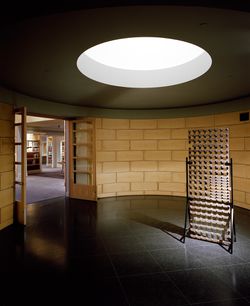
Cette exposition explore l’idée du pénitencier qui, au XIXe siècle, s’est frayée un chemin dans les consciences et les territoires d’Europe et d’Amérique du Nord. S’inspirant de la tendance rationaliste en architecture et des principes sociaux posés au XVIIIe siècle, les partisans de la prison se sont attachés à une claire géométrie de l’isolement, de la surveillance et(...)
Cette exposition explore l’idée du pénitencier qui, au XIXe siècle, s’est frayée un chemin dans les consciences et les territoires d’Europe et d’Amérique du Nord. S’inspirant de la tendance rationaliste en architecture et des principes sociaux posés au XVIIIe siècle, les partisans de la prison se sont attachés à une claire géométrie de l’isolement, de la surveillance et(...)
Localisation:
Vitrines
Vitrines
Date:
8 novembre 1995 au 31 mai 1996
8 novembre 1995 au 31 mai 1996
Titre:
L’idée du pénitencier
Actions:
Description:
Cette exposition explore l’idée du pénitencier qui, au XIXe siècle, s’est frayée un chemin dans les consciences et les territoires d’Europe et d’Amérique du Nord. S’inspirant de la tendance rationaliste en architecture et des principes sociaux posés au XVIIIe siècle, les partisans de la prison se sont attachés à une claire géométrie de l’isolement, de la surveillance et(...)
L’idée du pénitencier
Actions:
Description:
Cette exposition explore l’idée du pénitencier qui, au XIXe siècle, s’est frayée un chemin dans les consciences et les territoires d’Europe et d’Amérique du Nord. S’inspirant de la tendance rationaliste en architecture et des principes sociaux posés au XVIIIe siècle, les partisans de la prison se sont attachés à une claire géométrie de l’isolement, de la surveillance et(...)
Classification:
expositions
expositions
Date:
8 novembre 1995 au
31 mai 1996
8 novembre 1995 au
31 mai 1996
Localisation:
Vitrines
Vitrines
Classification:
archives
Niveau de description archivistique:
Fonds
archives
Niveau de description archivistique:
Fonds
Titre:
Fonds Zéphirin Perrault
Fonds Zéphirin Perrault
Numéro de référence:
AP107
Résumé:
The Zéphirin Perrault fonds, 1866-1885, documents architect Zéphirin Perrault’s design of approximately ten churches in rural Québec and the St. Michael Cathedral in Toronto, Ontario. A drawing by Victor Bourgneau (1809-1888) is also included in this fonds. Materials consist of approximately 42 drawings and 5 textual documents.
AP107
Résumé:
The Zéphirin Perrault fonds, 1866-1885, documents architect Zéphirin Perrault’s design of approximately ten churches in rural Québec and the St. Michael Cathedral in Toronto, Ontario. A drawing by Victor Bourgneau (1809-1888) is also included in this fonds. Materials consist of approximately 42 drawings and 5 textual documents.
Personnes et institutions:
Date:
1866-1885
1866-1885
Titre:
Fonds Zéphirin Perrault
Actions:
AP107
Résumé:
The Zéphirin Perrault fonds, 1866-1885, documents architect Zéphirin Perrault’s design of approximately ten churches in rural Québec and the St. Michael Cathedral in Toronto, Ontario. A drawing by Victor Bourgneau (1809-1888) is also included in this fonds. Materials consist of approximately 42 drawings and 5 textual documents.
Fonds Zéphirin Perrault
Actions:
AP107
Résumé:
The Zéphirin Perrault fonds, 1866-1885, documents architect Zéphirin Perrault’s design of approximately ten churches in rural Québec and the St. Michael Cathedral in Toronto, Ontario. A drawing by Victor Bourgneau (1809-1888) is also included in this fonds. Materials consist of approximately 42 drawings and 5 textual documents.
Classification:
archives
Niveau de description archivistique:
Fonds
archives
Niveau de description archivistique:
Fonds
Date:
1866-1885
1866-1885
Personnes et institutions:
Niveau de description archivistique:
Sous-série
Sous-série
Titre:
Travel Records
Travel Records
Numéro de référence:
AP032.S1.SS3.D1
Description:
Journals, photographs and documentation material of Goldsmith's European travels to Great Britain, continental Europe and parts of the Middle East before returning to the United States in 1955. Includes student papers from the University of Rome, and drawings and photographs of Goldsmith's unbuilt architecture/engineering projects in Italy.
AP032.S1.SS3.D1
Description:
Journals, photographs and documentation material of Goldsmith's European travels to Great Britain, continental Europe and parts of the Middle East before returning to the United States in 1955. Includes student papers from the University of Rome, and drawings and photographs of Goldsmith's unbuilt architecture/engineering projects in Italy.
Personnes et institutions:
Date:
1951-1955
1951-1955
Titre:
Travel Records
Actions:
AP032.S1.SS3.D1
Description:
Journals, photographs and documentation material of Goldsmith's European travels to Great Britain, continental Europe and parts of the Middle East before returning to the United States in 1955. Includes student papers from the University of Rome, and drawings and photographs of Goldsmith's unbuilt architecture/engineering projects in Italy.
Travel Records
Actions:
AP032.S1.SS3.D1
Description:
Journals, photographs and documentation material of Goldsmith's European travels to Great Britain, continental Europe and parts of the Middle East before returning to the United States in 1955. Includes student papers from the University of Rome, and drawings and photographs of Goldsmith's unbuilt architecture/engineering projects in Italy.
Niveau de description archivistique:
File 1
File 1
Date:
1951-1955
1951-1955
Personnes et institutions:
Niveau de description archivistique:
Sous-série
Sous-série
Titre:
A + U Layout
A + U Layout
Numéro de référence:
AP143.S5.D2
Description:
File documents a publication layout for an article about House X in Bloomfield Hills, Michigan, featured in the January 1980 issue of the magazine 'Architecture and Urbanism' (A + U). Material in this file was produced before 1980. File contains publication drawings and textual records, including a maquette for the publication.
AP143.S5.D2
Description:
File documents a publication layout for an article about House X in Bloomfield Hills, Michigan, featured in the January 1980 issue of the magazine 'Architecture and Urbanism' (A + U). Material in this file was produced before 1980. File contains publication drawings and textual records, including a maquette for the publication.
Personnes et institutions:
Date:
[before 1980]
[before 1980]
Titre:
A + U Layout
Actions:
AP143.S5.D2
Description:
File documents a publication layout for an article about House X in Bloomfield Hills, Michigan, featured in the January 1980 issue of the magazine 'Architecture and Urbanism' (A + U). Material in this file was produced before 1980. File contains publication drawings and textual records, including a maquette for the publication.
A + U Layout
Actions:
AP143.S5.D2
Description:
File documents a publication layout for an article about House X in Bloomfield Hills, Michigan, featured in the January 1980 issue of the magazine 'Architecture and Urbanism' (A + U). Material in this file was produced before 1980. File contains publication drawings and textual records, including a maquette for the publication.
Niveau de description archivistique:
File 2
File 2
Date:
[before 1980]
[before 1980]
Personnes et institutions:
Niveau de description archivistique:
Projet
Projet
Titre:
Une histoire
Une histoire
Numéro de référence:
AP041.S1.1975.D1
Description:
UNE HISTOIRE is a project consisting of photographs, photomontages, drawings and a wooden sculpture. A photograph of a worker’s house near a pulp mill in Trois-Rivières became the focus of the series. In an attempt to understand the architecture of that house, and how industrialization was being reflected in the architecture of Québec, Charney went to visit the house in 1974, only to find it had already been torn down. Charney photographed its surroundings and tried to reproduce its likeness in drawings. Unsatisfied with the results, he built a wooden sculpture (UNE HISTOIRE…Le trésor de Trois-Rivières, 1975), a replica of the house, in an attempt to fully “know” and understand the structure. Source: Melvin Charney: Oeuvres 1970-1979. Montréal Musée d’art contemporain. (p. 29-36)
AP041.S1.1975.D1
Description:
UNE HISTOIRE is a project consisting of photographs, photomontages, drawings and a wooden sculpture. A photograph of a worker’s house near a pulp mill in Trois-Rivières became the focus of the series. In an attempt to understand the architecture of that house, and how industrialization was being reflected in the architecture of Québec, Charney went to visit the house in 1974, only to find it had already been torn down. Charney photographed its surroundings and tried to reproduce its likeness in drawings. Unsatisfied with the results, he built a wooden sculpture (UNE HISTOIRE…Le trésor de Trois-Rivières, 1975), a replica of the house, in an attempt to fully “know” and understand the structure. Source: Melvin Charney: Oeuvres 1970-1979. Montréal Musée d’art contemporain. (p. 29-36)
Personnes et institutions:
Date:
1975-1978
1975-1978
Titre:
Une histoire
Actions:
AP041.S1.1975.D1
Description:
UNE HISTOIRE is a project consisting of photographs, photomontages, drawings and a wooden sculpture. A photograph of a worker’s house near a pulp mill in Trois-Rivières became the focus of the series. In an attempt to understand the architecture of that house, and how industrialization was being reflected in the architecture of Québec, Charney went to visit the house in 1974, only to find it had already been torn down. Charney photographed its surroundings and tried to reproduce its likeness in drawings. Unsatisfied with the results, he built a wooden sculpture (UNE HISTOIRE…Le trésor de Trois-Rivières, 1975), a replica of the house, in an attempt to fully “know” and understand the structure. Source: Melvin Charney: Oeuvres 1970-1979. Montréal Musée d’art contemporain. (p. 29-36)
Une histoire
Actions:
AP041.S1.1975.D1
Description:
UNE HISTOIRE is a project consisting of photographs, photomontages, drawings and a wooden sculpture. A photograph of a worker’s house near a pulp mill in Trois-Rivières became the focus of the series. In an attempt to understand the architecture of that house, and how industrialization was being reflected in the architecture of Québec, Charney went to visit the house in 1974, only to find it had already been torn down. Charney photographed its surroundings and tried to reproduce its likeness in drawings. Unsatisfied with the results, he built a wooden sculpture (UNE HISTOIRE…Le trésor de Trois-Rivières, 1975), a replica of the house, in an attempt to fully “know” and understand the structure. Source: Melvin Charney: Oeuvres 1970-1979. Montréal Musée d’art contemporain. (p. 29-36)
Niveau de description archivistique:
Project
Project
Date:
1975-1978
1975-1978
Personnes et institutions:
Niveau de description archivistique:
Projet
Projet
Numéro de référence:
AP178.S1.1998.PR07
Description:
This project series documents the C. Cultural e Audit. para a Fundação Ibere Camargo in Porto Alegre, Brazil. While the records were held in the office’s archives this project was assigned the number 102/90. The office assigned the date 1998 to this project. At the end of the nineties, an architectural competition was held for the construction of a new building for the Iberê Camargo Foundation. The foundation holds the archives and work of the Brazilian painter Ibere Carmargo, as well as hosts temporary exhibitions and seminars. The project site is located near the Guaíba River, between a cliff and the Avenida Padre Cacique. Collaborators on the project were Barbara Rangel, Pedro Polonia, Michele Gigante, Francesca Montalto, Atsushi Ueno, Rita Amaral, José Luiz Cana, and Camargo Correa. The three-stories building is 88,000 square feet and includes nine galleries, storage spaces, offices, a bookstore, an auditorium, and a video library. Each of the galleries is independent but linked via a system of ramps. One of the unique qualities of the building are the ramps that come out of its concrete façade. Due to the limited space, the parking was built below the Avenida Padre Cacique. The building respects the concept of sustainable development, with a sewage treatment station that redistributes the water to the surrounding vegetation. The museum was Siza's first built project in Brazil and it was inaugurated in 2008. Siza received the Golden Lion award at the Venice Architecture Biennale in 2003 for this project. Documenting this project are sketches, studies, preliminary drawings, working drawings, technical drawings, and electrical drawings. Textual material includes project documentation, correspondence, and documentation regarding exhibitions about the building. Photographic material documents the models, project site, and built project.
AP178.S1.1998.PR07
Description:
This project series documents the C. Cultural e Audit. para a Fundação Ibere Camargo in Porto Alegre, Brazil. While the records were held in the office’s archives this project was assigned the number 102/90. The office assigned the date 1998 to this project. At the end of the nineties, an architectural competition was held for the construction of a new building for the Iberê Camargo Foundation. The foundation holds the archives and work of the Brazilian painter Ibere Carmargo, as well as hosts temporary exhibitions and seminars. The project site is located near the Guaíba River, between a cliff and the Avenida Padre Cacique. Collaborators on the project were Barbara Rangel, Pedro Polonia, Michele Gigante, Francesca Montalto, Atsushi Ueno, Rita Amaral, José Luiz Cana, and Camargo Correa. The three-stories building is 88,000 square feet and includes nine galleries, storage spaces, offices, a bookstore, an auditorium, and a video library. Each of the galleries is independent but linked via a system of ramps. One of the unique qualities of the building are the ramps that come out of its concrete façade. Due to the limited space, the parking was built below the Avenida Padre Cacique. The building respects the concept of sustainable development, with a sewage treatment station that redistributes the water to the surrounding vegetation. The museum was Siza's first built project in Brazil and it was inaugurated in 2008. Siza received the Golden Lion award at the Venice Architecture Biennale in 2003 for this project. Documenting this project are sketches, studies, preliminary drawings, working drawings, technical drawings, and electrical drawings. Textual material includes project documentation, correspondence, and documentation regarding exhibitions about the building. Photographic material documents the models, project site, and built project.
Personnes et institutions:
Date:
1998-2006
1998-2006
Titre:
C. Cultural e Audit. para a Fundação Iberê Camargo [Iberê Camargo Foundation Museum], Porto Alegre, Brazil (1998)
Actions:
AP178.S1.1998.PR07
Description:
This project series documents the C. Cultural e Audit. para a Fundação Ibere Camargo in Porto Alegre, Brazil. While the records were held in the office’s archives this project was assigned the number 102/90. The office assigned the date 1998 to this project. At the end of the nineties, an architectural competition was held for the construction of a new building for the Iberê Camargo Foundation. The foundation holds the archives and work of the Brazilian painter Ibere Carmargo, as well as hosts temporary exhibitions and seminars. The project site is located near the Guaíba River, between a cliff and the Avenida Padre Cacique. Collaborators on the project were Barbara Rangel, Pedro Polonia, Michele Gigante, Francesca Montalto, Atsushi Ueno, Rita Amaral, José Luiz Cana, and Camargo Correa. The three-stories building is 88,000 square feet and includes nine galleries, storage spaces, offices, a bookstore, an auditorium, and a video library. Each of the galleries is independent but linked via a system of ramps. One of the unique qualities of the building are the ramps that come out of its concrete façade. Due to the limited space, the parking was built below the Avenida Padre Cacique. The building respects the concept of sustainable development, with a sewage treatment station that redistributes the water to the surrounding vegetation. The museum was Siza's first built project in Brazil and it was inaugurated in 2008. Siza received the Golden Lion award at the Venice Architecture Biennale in 2003 for this project. Documenting this project are sketches, studies, preliminary drawings, working drawings, technical drawings, and electrical drawings. Textual material includes project documentation, correspondence, and documentation regarding exhibitions about the building. Photographic material documents the models, project site, and built project.
C. Cultural e Audit. para a Fundação Iberê Camargo [Iberê Camargo Foundation Museum], Porto Alegre, Brazil (1998)
Actions:
AP178.S1.1998.PR07
Description:
This project series documents the C. Cultural e Audit. para a Fundação Ibere Camargo in Porto Alegre, Brazil. While the records were held in the office’s archives this project was assigned the number 102/90. The office assigned the date 1998 to this project. At the end of the nineties, an architectural competition was held for the construction of a new building for the Iberê Camargo Foundation. The foundation holds the archives and work of the Brazilian painter Ibere Carmargo, as well as hosts temporary exhibitions and seminars. The project site is located near the Guaíba River, between a cliff and the Avenida Padre Cacique. Collaborators on the project were Barbara Rangel, Pedro Polonia, Michele Gigante, Francesca Montalto, Atsushi Ueno, Rita Amaral, José Luiz Cana, and Camargo Correa. The three-stories building is 88,000 square feet and includes nine galleries, storage spaces, offices, a bookstore, an auditorium, and a video library. Each of the galleries is independent but linked via a system of ramps. One of the unique qualities of the building are the ramps that come out of its concrete façade. Due to the limited space, the parking was built below the Avenida Padre Cacique. The building respects the concept of sustainable development, with a sewage treatment station that redistributes the water to the surrounding vegetation. The museum was Siza's first built project in Brazil and it was inaugurated in 2008. Siza received the Golden Lion award at the Venice Architecture Biennale in 2003 for this project. Documenting this project are sketches, studies, preliminary drawings, working drawings, technical drawings, and electrical drawings. Textual material includes project documentation, correspondence, and documentation regarding exhibitions about the building. Photographic material documents the models, project site, and built project.
Niveau de description archivistique:
Project
Project
Date:
1998-2006
1998-2006
Personnes et institutions:
Niveau de description archivistique:
Projet
Projet
Numéro de référence:
AP166.S1.1990.PR1
Description:
This file documents the design and construction of the Galaxy Toyama Gymnasium in Imizu, Toyama, Japan. The project was developed as a theme pavilion for the 1st Japan Expo Toyama in 1992. The roof of the gymnasium is an undulating space frame structure with ball joints. Computers were used to find an optimum form for the roof and to calculate the dimensions of each component. The file contains approximately 200 design development drawings. There are also working drawings, including 72 numbered architectural drawings and 44 structural drawings. Digital material includes a 3-dimensional model of the roof and sections from a photoelasticity experiment. The remainder of the digital files consist of digital images of the built work and scans of drawings.There are a number of images printed out from computer files, including photoelasticity models and 3-D perspectives of the roof and of the building interior. There is a series of images from computer simulations of the roof dating from 1996. A set of 12 presentation panels contain wireframe images of the roof. There is a small amount of textual material, including proposal documents, graphics for the name of the building, publications and facsimile transmissions. Material in this file was created between 1990 and 2012, but predominantly between 1990 and 1992.
AP166.S1.1990.PR1
Description:
This file documents the design and construction of the Galaxy Toyama Gymnasium in Imizu, Toyama, Japan. The project was developed as a theme pavilion for the 1st Japan Expo Toyama in 1992. The roof of the gymnasium is an undulating space frame structure with ball joints. Computers were used to find an optimum form for the roof and to calculate the dimensions of each component. The file contains approximately 200 design development drawings. There are also working drawings, including 72 numbered architectural drawings and 44 structural drawings. Digital material includes a 3-dimensional model of the roof and sections from a photoelasticity experiment. The remainder of the digital files consist of digital images of the built work and scans of drawings.There are a number of images printed out from computer files, including photoelasticity models and 3-D perspectives of the roof and of the building interior. There is a series of images from computer simulations of the roof dating from 1996. A set of 12 presentation panels contain wireframe images of the roof. There is a small amount of textual material, including proposal documents, graphics for the name of the building, publications and facsimile transmissions. Material in this file was created between 1990 and 2012, but predominantly between 1990 and 1992.
Personnes et institutions:
Date:
1990-1996, 2012
1990-1996, 2012
Titre:
Galaxy Toyama Gymnasium, Imizu, Japan (1990-1992)
Actions:
AP166.S1.1990.PR1
Description:
This file documents the design and construction of the Galaxy Toyama Gymnasium in Imizu, Toyama, Japan. The project was developed as a theme pavilion for the 1st Japan Expo Toyama in 1992. The roof of the gymnasium is an undulating space frame structure with ball joints. Computers were used to find an optimum form for the roof and to calculate the dimensions of each component. The file contains approximately 200 design development drawings. There are also working drawings, including 72 numbered architectural drawings and 44 structural drawings. Digital material includes a 3-dimensional model of the roof and sections from a photoelasticity experiment. The remainder of the digital files consist of digital images of the built work and scans of drawings.There are a number of images printed out from computer files, including photoelasticity models and 3-D perspectives of the roof and of the building interior. There is a series of images from computer simulations of the roof dating from 1996. A set of 12 presentation panels contain wireframe images of the roof. There is a small amount of textual material, including proposal documents, graphics for the name of the building, publications and facsimile transmissions. Material in this file was created between 1990 and 2012, but predominantly between 1990 and 1992.
Galaxy Toyama Gymnasium, Imizu, Japan (1990-1992)
Actions:
AP166.S1.1990.PR1
Description:
This file documents the design and construction of the Galaxy Toyama Gymnasium in Imizu, Toyama, Japan. The project was developed as a theme pavilion for the 1st Japan Expo Toyama in 1992. The roof of the gymnasium is an undulating space frame structure with ball joints. Computers were used to find an optimum form for the roof and to calculate the dimensions of each component. The file contains approximately 200 design development drawings. There are also working drawings, including 72 numbered architectural drawings and 44 structural drawings. Digital material includes a 3-dimensional model of the roof and sections from a photoelasticity experiment. The remainder of the digital files consist of digital images of the built work and scans of drawings.There are a number of images printed out from computer files, including photoelasticity models and 3-D perspectives of the roof and of the building interior. There is a series of images from computer simulations of the roof dating from 1996. A set of 12 presentation panels contain wireframe images of the roof. There is a small amount of textual material, including proposal documents, graphics for the name of the building, publications and facsimile transmissions. Material in this file was created between 1990 and 2012, but predominantly between 1990 and 1992.
Niveau de description archivistique:
project
project
Date:
1990-1996, 2012
1990-1996, 2012
Personnes et institutions:
Niveau de description archivistique:
Projet
Projet
Numéro de référence:
AP056.S1.1989.PR01
Description:
This project series documents an expansion of the Marc Laurent store at 110 Bloor Street West in Toronto in 1989. No project number was identifed. This project consisted of the eastward expansion and renovations to the existing high-end retail store. The original design of the store was completed prior to the founding of KPMB, by Bruce Kuwabara and Thomas Payne in 1986. The new space saw the addition of 1000 square feet to the store at the street level and relocation of the entrance doors to accommodate this expansion. An expansion of the lower concourse level also added 1,457 square feet. The new spaces extended the architectural style already established in earlier phases of the store's development. Materials used in this project, as in earlier projects, included steel, glass, rubber, and aluminum, combined with natural wood and stone. This project is considered Phase 3 of the store's development, with 2 future phases to be completed by KPMB Architects soon after. The project is recorded through original drawings and photographs dating from 1989-1991. The drawings consist primarily of sketches, plans, sections, and furnishing drawings. The photographs show the finished interiors.
AP056.S1.1989.PR01
Description:
This project series documents an expansion of the Marc Laurent store at 110 Bloor Street West in Toronto in 1989. No project number was identifed. This project consisted of the eastward expansion and renovations to the existing high-end retail store. The original design of the store was completed prior to the founding of KPMB, by Bruce Kuwabara and Thomas Payne in 1986. The new space saw the addition of 1000 square feet to the store at the street level and relocation of the entrance doors to accommodate this expansion. An expansion of the lower concourse level also added 1,457 square feet. The new spaces extended the architectural style already established in earlier phases of the store's development. Materials used in this project, as in earlier projects, included steel, glass, rubber, and aluminum, combined with natural wood and stone. This project is considered Phase 3 of the store's development, with 2 future phases to be completed by KPMB Architects soon after. The project is recorded through original drawings and photographs dating from 1989-1991. The drawings consist primarily of sketches, plans, sections, and furnishing drawings. The photographs show the finished interiors.
Personnes et institutions:
Date:
1989-1991
1989-1991
Titre:
Marc Laurent Store, Phase 3, Toronto (1989-1991)
Actions:
AP056.S1.1989.PR01
Description:
This project series documents an expansion of the Marc Laurent store at 110 Bloor Street West in Toronto in 1989. No project number was identifed. This project consisted of the eastward expansion and renovations to the existing high-end retail store. The original design of the store was completed prior to the founding of KPMB, by Bruce Kuwabara and Thomas Payne in 1986. The new space saw the addition of 1000 square feet to the store at the street level and relocation of the entrance doors to accommodate this expansion. An expansion of the lower concourse level also added 1,457 square feet. The new spaces extended the architectural style already established in earlier phases of the store's development. Materials used in this project, as in earlier projects, included steel, glass, rubber, and aluminum, combined with natural wood and stone. This project is considered Phase 3 of the store's development, with 2 future phases to be completed by KPMB Architects soon after. The project is recorded through original drawings and photographs dating from 1989-1991. The drawings consist primarily of sketches, plans, sections, and furnishing drawings. The photographs show the finished interiors.
Marc Laurent Store, Phase 3, Toronto (1989-1991)
Actions:
AP056.S1.1989.PR01
Description:
This project series documents an expansion of the Marc Laurent store at 110 Bloor Street West in Toronto in 1989. No project number was identifed. This project consisted of the eastward expansion and renovations to the existing high-end retail store. The original design of the store was completed prior to the founding of KPMB, by Bruce Kuwabara and Thomas Payne in 1986. The new space saw the addition of 1000 square feet to the store at the street level and relocation of the entrance doors to accommodate this expansion. An expansion of the lower concourse level also added 1,457 square feet. The new spaces extended the architectural style already established in earlier phases of the store's development. Materials used in this project, as in earlier projects, included steel, glass, rubber, and aluminum, combined with natural wood and stone. This project is considered Phase 3 of the store's development, with 2 future phases to be completed by KPMB Architects soon after. The project is recorded through original drawings and photographs dating from 1989-1991. The drawings consist primarily of sketches, plans, sections, and furnishing drawings. The photographs show the finished interiors.
Niveau de description archivistique:
Project
Project
Date:
1989-1991
1989-1991
Personnes et institutions:
Niveau de description archivistique:
Projet
Projet
Titre:
Westpen
Westpen
Numéro de référence:
AP144.S2.D101
Description:
File documents an unexecuted project for Westpen, an animal enclosure for the property at West Green House at Hartley Wintney, in Hampshire, England, and also the location for the project Greenbird (AP144.S2.D96). The pen can be adapted for several uses and its pivoting and sliding gates can be removed when not used for livestock, to be converted into a sculptured landscape for picnicking and leisure activities. Conceptual drawings include diagrammatic sketches which show the movement of animals through the pen for collecting, weighing, cleaning, and shearing. Sketches show pivoting rails, and preliminary plans are annotated with individual gate dimensions. Design development and working drawings illustrate the development of the pen components: 8 ft swing slide and cattle gates; 3 ft sheep gates; a sheep dip and footbath area; a sheep drafting and guillotine gate; and feed bins. Plans and details show the concrete apron and pre-formed gate sockets. Reprographic copies made from a consultant's drawings show the configuration of gates and hurdles. Some material in this file was published in Price-Works II' (London: Architectural Press, 1984), 72, 79. Material in this file was produced between 1977 and 1979. File contains conceptual drawings, design development drawings, model, photographic materials and textual records.
AP144.S2.D101
Description:
File documents an unexecuted project for Westpen, an animal enclosure for the property at West Green House at Hartley Wintney, in Hampshire, England, and also the location for the project Greenbird (AP144.S2.D96). The pen can be adapted for several uses and its pivoting and sliding gates can be removed when not used for livestock, to be converted into a sculptured landscape for picnicking and leisure activities. Conceptual drawings include diagrammatic sketches which show the movement of animals through the pen for collecting, weighing, cleaning, and shearing. Sketches show pivoting rails, and preliminary plans are annotated with individual gate dimensions. Design development and working drawings illustrate the development of the pen components: 8 ft swing slide and cattle gates; 3 ft sheep gates; a sheep dip and footbath area; a sheep drafting and guillotine gate; and feed bins. Plans and details show the concrete apron and pre-formed gate sockets. Reprographic copies made from a consultant's drawings show the configuration of gates and hurdles. Some material in this file was published in Price-Works II' (London: Architectural Press, 1984), 72, 79. Material in this file was produced between 1977 and 1979. File contains conceptual drawings, design development drawings, model, photographic materials and textual records.
Personnes et institutions:
Date:
1977-1979
1977-1979
Titre:
Westpen
Actions:
AP144.S2.D101
Description:
File documents an unexecuted project for Westpen, an animal enclosure for the property at West Green House at Hartley Wintney, in Hampshire, England, and also the location for the project Greenbird (AP144.S2.D96). The pen can be adapted for several uses and its pivoting and sliding gates can be removed when not used for livestock, to be converted into a sculptured landscape for picnicking and leisure activities. Conceptual drawings include diagrammatic sketches which show the movement of animals through the pen for collecting, weighing, cleaning, and shearing. Sketches show pivoting rails, and preliminary plans are annotated with individual gate dimensions. Design development and working drawings illustrate the development of the pen components: 8 ft swing slide and cattle gates; 3 ft sheep gates; a sheep dip and footbath area; a sheep drafting and guillotine gate; and feed bins. Plans and details show the concrete apron and pre-formed gate sockets. Reprographic copies made from a consultant's drawings show the configuration of gates and hurdles. Some material in this file was published in Price-Works II' (London: Architectural Press, 1984), 72, 79. Material in this file was produced between 1977 and 1979. File contains conceptual drawings, design development drawings, model, photographic materials and textual records.
Westpen
Actions:
AP144.S2.D101
Description:
File documents an unexecuted project for Westpen, an animal enclosure for the property at West Green House at Hartley Wintney, in Hampshire, England, and also the location for the project Greenbird (AP144.S2.D96). The pen can be adapted for several uses and its pivoting and sliding gates can be removed when not used for livestock, to be converted into a sculptured landscape for picnicking and leisure activities. Conceptual drawings include diagrammatic sketches which show the movement of animals through the pen for collecting, weighing, cleaning, and shearing. Sketches show pivoting rails, and preliminary plans are annotated with individual gate dimensions. Design development and working drawings illustrate the development of the pen components: 8 ft swing slide and cattle gates; 3 ft sheep gates; a sheep dip and footbath area; a sheep drafting and guillotine gate; and feed bins. Plans and details show the concrete apron and pre-formed gate sockets. Reprographic copies made from a consultant's drawings show the configuration of gates and hurdles. Some material in this file was published in Price-Works II' (London: Architectural Press, 1984), 72, 79. Material in this file was produced between 1977 and 1979. File contains conceptual drawings, design development drawings, model, photographic materials and textual records.
Niveau de description archivistique:
File 101
File 101
Date:
1977-1979
1977-1979
Personnes et institutions:


