


7552 Résultats
Niveau de description archivistique:
Projet
Projet
Numéro de référence:
AP075.S1.1994.PR01
Description:
Project series documents Cornelia Hahn Oberlander's project of a roof garden for the New Canadian Embassy at Leipziger Platz in Berlin, Germany. Oberlander worked on this project in from 1999-2005 with architectural firm Kuwabara, Payne, McKenna, Blumberg Architects. Oberlander's work for the project included a terrace at the Ambassador's Level (6th floor) with mounded evergreen white flowering groundcover azaleas, cascading roses hanging along the Leipzigerstrasse facade, and a green roof on top of the building. The concept of the landscaping of the green roof was to represente Canada's land of the north in an abstract form, simulating the river system of the MacKenzie River in the Northwest Territories, linking Alberta to the Arctic Ocean. She used black-glass panels to represente the water. The drainage for the green roof was also connected the drainage infrastructure of the building to recycle the water collected from the roof. The project series includes sketches and design development drawings for the green roof landscaping, planting details and irrigation details, presentation drawings from KPMB and drawings of the building used as reference. The project is also documented through research material, concept notes by Oberlander, correspondence, including with architects, consultants, contractors and clients, proposal, specifications, and press clippings about the project. The project series also includes sample of glass tiles used for the landscaping.
AP075.S1.1994.PR01
Description:
Project series documents Cornelia Hahn Oberlander's project of a roof garden for the New Canadian Embassy at Leipziger Platz in Berlin, Germany. Oberlander worked on this project in from 1999-2005 with architectural firm Kuwabara, Payne, McKenna, Blumberg Architects. Oberlander's work for the project included a terrace at the Ambassador's Level (6th floor) with mounded evergreen white flowering groundcover azaleas, cascading roses hanging along the Leipzigerstrasse facade, and a green roof on top of the building. The concept of the landscaping of the green roof was to represente Canada's land of the north in an abstract form, simulating the river system of the MacKenzie River in the Northwest Territories, linking Alberta to the Arctic Ocean. She used black-glass panels to represente the water. The drainage for the green roof was also connected the drainage infrastructure of the building to recycle the water collected from the roof. The project series includes sketches and design development drawings for the green roof landscaping, planting details and irrigation details, presentation drawings from KPMB and drawings of the building used as reference. The project is also documented through research material, concept notes by Oberlander, correspondence, including with architects, consultants, contractors and clients, proposal, specifications, and press clippings about the project. The project series also includes sample of glass tiles used for the landscaping.
Personnes et institutions:
Date:
1994-2005
1994-2005
Titre:
New Canadian Embassy in Berlin, Germany (1994-2005)
Actions:
AP075.S1.1994.PR01
Description:
Project series documents Cornelia Hahn Oberlander's project of a roof garden for the New Canadian Embassy at Leipziger Platz in Berlin, Germany. Oberlander worked on this project in from 1999-2005 with architectural firm Kuwabara, Payne, McKenna, Blumberg Architects. Oberlander's work for the project included a terrace at the Ambassador's Level (6th floor) with mounded evergreen white flowering groundcover azaleas, cascading roses hanging along the Leipzigerstrasse facade, and a green roof on top of the building. The concept of the landscaping of the green roof was to represente Canada's land of the north in an abstract form, simulating the river system of the MacKenzie River in the Northwest Territories, linking Alberta to the Arctic Ocean. She used black-glass panels to represente the water. The drainage for the green roof was also connected the drainage infrastructure of the building to recycle the water collected from the roof. The project series includes sketches and design development drawings for the green roof landscaping, planting details and irrigation details, presentation drawings from KPMB and drawings of the building used as reference. The project is also documented through research material, concept notes by Oberlander, correspondence, including with architects, consultants, contractors and clients, proposal, specifications, and press clippings about the project. The project series also includes sample of glass tiles used for the landscaping.
New Canadian Embassy in Berlin, Germany (1994-2005)
Actions:
AP075.S1.1994.PR01
Description:
Project series documents Cornelia Hahn Oberlander's project of a roof garden for the New Canadian Embassy at Leipziger Platz in Berlin, Germany. Oberlander worked on this project in from 1999-2005 with architectural firm Kuwabara, Payne, McKenna, Blumberg Architects. Oberlander's work for the project included a terrace at the Ambassador's Level (6th floor) with mounded evergreen white flowering groundcover azaleas, cascading roses hanging along the Leipzigerstrasse facade, and a green roof on top of the building. The concept of the landscaping of the green roof was to represente Canada's land of the north in an abstract form, simulating the river system of the MacKenzie River in the Northwest Territories, linking Alberta to the Arctic Ocean. She used black-glass panels to represente the water. The drainage for the green roof was also connected the drainage infrastructure of the building to recycle the water collected from the roof. The project series includes sketches and design development drawings for the green roof landscaping, planting details and irrigation details, presentation drawings from KPMB and drawings of the building used as reference. The project is also documented through research material, concept notes by Oberlander, correspondence, including with architects, consultants, contractors and clients, proposal, specifications, and press clippings about the project. The project series also includes sample of glass tiles used for the landscaping.
Niveau de description archivistique:
Project
Project
Date:
1994-2005
1994-2005
Personnes et institutions:
Classification:
photographies
photographies
Actions:
Numéro de référence:
PH1999:0172
Description:
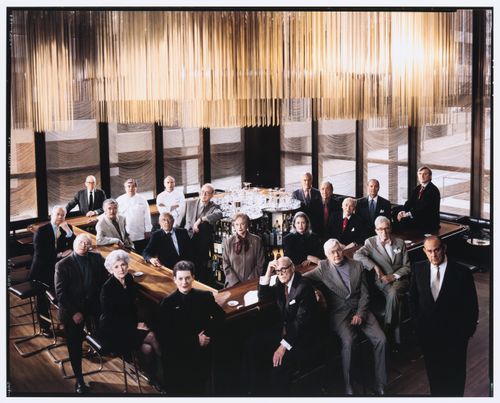
Photograph commissioned by Vanity Fair. Published in Vanity Fair, "Season in the Sun", August 1999.Outside the bar, counterclockwise from rear left: former pastry chef Albert Kumin, former press agent Roger Martin, landscape architect Karl Linn, architecture critic Ada Louise Huxtable, project director Phyllis Lambert, architect Philip Johnson, sculptor Richard Lippold, lawyer Lester Klepper, former co-owner Tom Margittai. Inside the bar, from left: former executive chef Seppi Renggli, current chef Hitsch Albin, former press agent Philip Miles, current pastry chef Patrick Lemblé, adman George Lois, food writer Mimi Sheraton, sculptor Marilynn Gelfman Karp, adman Ron Holland, menu and logo designer Emil Antonucci, former director George Lang, current co-directors Alex von Bidder and Julian Niccolini.
PH1999:0172
Description:
Photograph commissioned by Vanity Fair. Published in Vanity Fair, "Season in the Sun", August 1999.Outside the bar, counterclockwise from rear left: former pastry chef Albert Kumin, former press agent Roger Martin, landscape architect Karl Linn, architecture critic Ada Louise Huxtable, project director Phyllis Lambert, architect Philip Johnson, sculptor Richard Lippold, lawyer Lester Klepper, former co-owner Tom Margittai. Inside the bar, from left: former executive chef Seppi Renggli, current chef Hitsch Albin, former press agent Philip Miles, current pastry chef Patrick Lemblé, adman George Lois, food writer Mimi Sheraton, sculptor Marilynn Gelfman Karp, adman Ron Holland, menu and logo designer Emil Antonucci, former director George Lang, current co-directors Alex von Bidder and Julian Niccolini.
Personnes et institutions:
Sujet:
architecture
architecture
Date:
19 March 1999; 14 April 1999
19 March 1999; 14 April 1999
Titre:
Group portrait of the original creative team of the Four Seasons Restaurant Grill Room, including Phyllis Lambert and Philip Johnson, Restaurant Four Seasons, Seagram Building, New York City, New York, United States
Actions:
PH1999:0172
Description:
Photograph commissioned by Vanity Fair. Published in Vanity Fair, "Season in the Sun", August 1999.Outside the bar, counterclockwise from rear left: former pastry chef Albert Kumin, former press agent Roger Martin, landscape architect Karl Linn, architecture critic Ada Louise Huxtable, project director Phyllis Lambert, architect Philip Johnson, sculptor Richard Lippold, lawyer Lester Klepper, former co-owner Tom Margittai. Inside the bar, from left: former executive chef Seppi Renggli, current chef Hitsch Albin, former press agent Philip Miles, current pastry chef Patrick Lemblé, adman George Lois, food writer Mimi Sheraton, sculptor Marilynn Gelfman Karp, adman Ron Holland, menu and logo designer Emil Antonucci, former director George Lang, current co-directors Alex von Bidder and Julian Niccolini.
Group portrait of the original creative team of the Four Seasons Restaurant Grill Room, including Phyllis Lambert and Philip Johnson, Restaurant Four Seasons, Seagram Building, New York City, New York, United States
Actions:
PH1999:0172
Description:
Photograph commissioned by Vanity Fair. Published in Vanity Fair, "Season in the Sun", August 1999.Outside the bar, counterclockwise from rear left: former pastry chef Albert Kumin, former press agent Roger Martin, landscape architect Karl Linn, architecture critic Ada Louise Huxtable, project director Phyllis Lambert, architect Philip Johnson, sculptor Richard Lippold, lawyer Lester Klepper, former co-owner Tom Margittai. Inside the bar, from left: former executive chef Seppi Renggli, current chef Hitsch Albin, former press agent Philip Miles, current pastry chef Patrick Lemblé, adman George Lois, food writer Mimi Sheraton, sculptor Marilynn Gelfman Karp, adman Ron Holland, menu and logo designer Emil Antonucci, former director George Lang, current co-directors Alex von Bidder and Julian Niccolini.
Classification:
photographies
photographies
Date:
19 March 1999; 14 April 1999
19 March 1999; 14 April 1999
Personnes et institutions:
Sujet:
architecture
architecture
Niveau de description archivistique:
Projet
Projet
Titre:
Generator
Generator
Numéro de référence:
AP144.S2.D100
Description:
File documents Generator, an unexecuted project for the Gilman Paper Company, at the White Oak Plantation, in Yulee, Florida. After an initial investigation Cedric Price proposed a complex that could accommodate company activities, cultural events, and artist residencies and would provide "a menu of items for individual and group demands of space, control, containment and delight. A place to work, create, think, and stare." ('Architectural Review', Jan. 1980, 16). The design called for timber-framed structures with variable infill panels and cladding, along with screens, to be placed on a grid of concrete pads by cranes with the help of computers in response to users' needs. Conceptual, schematic and design development drawings show grid placement, site layout, landscaping, designs for cubes and components, proposed activities, axonometric views, and design notes with sketches. Development sketches, site plans, and charts include site analysis examining future growth, activity charts, shadow study plans, and axonometric details. Drawings of the structures include: plans, elevations, details, and perspective views for cubes, screens, and cladding; shadow studies for cube variations; and axonometric views of cube arrangements. Other drawings include: site plans and sections; landscaping and parking layouts; plans for circulation patterns; drawings for boardwalks; and electrical and drainage plans. Charts study design validity, activities, networks, project feasibility, component life-cycle, and cube and component placement/construction sequencing. Computer generated printouts by John Frazer, et al show perspective views of cubes from various viewpoints. Two sets of annotated reprographic copies show details for a typical cube and the foundation. Presentation and publication materials include: photographs and reprographic copies of design models; coloured reprographic copies of computer parts and facilities; a coloured air-brushed rendering of cubes and screens by "Jeremie '77"; two perspective renderings; and reprographic copies made from published material. Some material in this file was published in 'Building Design', 23 February 1979; 'Building Design', 9 November 1979; 'Architectural Review' (January 1980), 16-17; 'L'Architecture d'Aujourd'hui', December 1980; 'Techniques et Architecture', December 1980; 'Design', January 1981; 'New Scientist', 19 March 1981; 'Schemes: Cedric Price' (ex. cat.; London: Waddington Galleries, 1981); 'Cedric Price-Works II' (London: Architectural Press, 1984), 90, 92-97. Material in this file was produced between 1959 and 1995, but predominantly between 1976 and 1980. Main consultants for Generator in the United Kingdom include Felix J. Samuely & Partners, consulting engineers; Baker, Wilkins and Smith, quantity surveyors; John Frazer, computer modelling and systems; Sandy Brown Associates, acoustic consultants. Main consultants in the United States include Marvin Boutwell; Law Engineering Testing Company as consulting engineers; and WTCA; Robertson Ward Jr., as architects. Computer printouts in group DR1995:0280:538-552 in Generator (AP144.S2.D100) are attributed to John and Julia Frazer, Art and Design Research, Ulster Polytechnic and the Department of Architecture, Liverpool Polytechnic. Some material in group DR1995:0280:567-576 is attributed to Felix J. Samuely & Partners. File contains conceptual drawings, design, development drawings, presentation drawings, photographic materials, boxes, an artefact, models, and textual records.
AP144.S2.D100
Description:
File documents Generator, an unexecuted project for the Gilman Paper Company, at the White Oak Plantation, in Yulee, Florida. After an initial investigation Cedric Price proposed a complex that could accommodate company activities, cultural events, and artist residencies and would provide "a menu of items for individual and group demands of space, control, containment and delight. A place to work, create, think, and stare." ('Architectural Review', Jan. 1980, 16). The design called for timber-framed structures with variable infill panels and cladding, along with screens, to be placed on a grid of concrete pads by cranes with the help of computers in response to users' needs. Conceptual, schematic and design development drawings show grid placement, site layout, landscaping, designs for cubes and components, proposed activities, axonometric views, and design notes with sketches. Development sketches, site plans, and charts include site analysis examining future growth, activity charts, shadow study plans, and axonometric details. Drawings of the structures include: plans, elevations, details, and perspective views for cubes, screens, and cladding; shadow studies for cube variations; and axonometric views of cube arrangements. Other drawings include: site plans and sections; landscaping and parking layouts; plans for circulation patterns; drawings for boardwalks; and electrical and drainage plans. Charts study design validity, activities, networks, project feasibility, component life-cycle, and cube and component placement/construction sequencing. Computer generated printouts by John Frazer, et al show perspective views of cubes from various viewpoints. Two sets of annotated reprographic copies show details for a typical cube and the foundation. Presentation and publication materials include: photographs and reprographic copies of design models; coloured reprographic copies of computer parts and facilities; a coloured air-brushed rendering of cubes and screens by "Jeremie '77"; two perspective renderings; and reprographic copies made from published material. Some material in this file was published in 'Building Design', 23 February 1979; 'Building Design', 9 November 1979; 'Architectural Review' (January 1980), 16-17; 'L'Architecture d'Aujourd'hui', December 1980; 'Techniques et Architecture', December 1980; 'Design', January 1981; 'New Scientist', 19 March 1981; 'Schemes: Cedric Price' (ex. cat.; London: Waddington Galleries, 1981); 'Cedric Price-Works II' (London: Architectural Press, 1984), 90, 92-97. Material in this file was produced between 1959 and 1995, but predominantly between 1976 and 1980. Main consultants for Generator in the United Kingdom include Felix J. Samuely & Partners, consulting engineers; Baker, Wilkins and Smith, quantity surveyors; John Frazer, computer modelling and systems; Sandy Brown Associates, acoustic consultants. Main consultants in the United States include Marvin Boutwell; Law Engineering Testing Company as consulting engineers; and WTCA; Robertson Ward Jr., as architects. Computer printouts in group DR1995:0280:538-552 in Generator (AP144.S2.D100) are attributed to John and Julia Frazer, Art and Design Research, Ulster Polytechnic and the Department of Architecture, Liverpool Polytechnic. Some material in group DR1995:0280:567-576 is attributed to Felix J. Samuely & Partners. File contains conceptual drawings, design, development drawings, presentation drawings, photographic materials, boxes, an artefact, models, and textual records.
Personnes et institutions:
Date:
1959-1995, predominant 1976-1980
1959-1995, predominant 1976-1980
Titre:
Generator
Actions:
AP144.S2.D100
Description:
File documents Generator, an unexecuted project for the Gilman Paper Company, at the White Oak Plantation, in Yulee, Florida. After an initial investigation Cedric Price proposed a complex that could accommodate company activities, cultural events, and artist residencies and would provide "a menu of items for individual and group demands of space, control, containment and delight. A place to work, create, think, and stare." ('Architectural Review', Jan. 1980, 16). The design called for timber-framed structures with variable infill panels and cladding, along with screens, to be placed on a grid of concrete pads by cranes with the help of computers in response to users' needs. Conceptual, schematic and design development drawings show grid placement, site layout, landscaping, designs for cubes and components, proposed activities, axonometric views, and design notes with sketches. Development sketches, site plans, and charts include site analysis examining future growth, activity charts, shadow study plans, and axonometric details. Drawings of the structures include: plans, elevations, details, and perspective views for cubes, screens, and cladding; shadow studies for cube variations; and axonometric views of cube arrangements. Other drawings include: site plans and sections; landscaping and parking layouts; plans for circulation patterns; drawings for boardwalks; and electrical and drainage plans. Charts study design validity, activities, networks, project feasibility, component life-cycle, and cube and component placement/construction sequencing. Computer generated printouts by John Frazer, et al show perspective views of cubes from various viewpoints. Two sets of annotated reprographic copies show details for a typical cube and the foundation. Presentation and publication materials include: photographs and reprographic copies of design models; coloured reprographic copies of computer parts and facilities; a coloured air-brushed rendering of cubes and screens by "Jeremie '77"; two perspective renderings; and reprographic copies made from published material. Some material in this file was published in 'Building Design', 23 February 1979; 'Building Design', 9 November 1979; 'Architectural Review' (January 1980), 16-17; 'L'Architecture d'Aujourd'hui', December 1980; 'Techniques et Architecture', December 1980; 'Design', January 1981; 'New Scientist', 19 March 1981; 'Schemes: Cedric Price' (ex. cat.; London: Waddington Galleries, 1981); 'Cedric Price-Works II' (London: Architectural Press, 1984), 90, 92-97. Material in this file was produced between 1959 and 1995, but predominantly between 1976 and 1980. Main consultants for Generator in the United Kingdom include Felix J. Samuely & Partners, consulting engineers; Baker, Wilkins and Smith, quantity surveyors; John Frazer, computer modelling and systems; Sandy Brown Associates, acoustic consultants. Main consultants in the United States include Marvin Boutwell; Law Engineering Testing Company as consulting engineers; and WTCA; Robertson Ward Jr., as architects. Computer printouts in group DR1995:0280:538-552 in Generator (AP144.S2.D100) are attributed to John and Julia Frazer, Art and Design Research, Ulster Polytechnic and the Department of Architecture, Liverpool Polytechnic. Some material in group DR1995:0280:567-576 is attributed to Felix J. Samuely & Partners. File contains conceptual drawings, design, development drawings, presentation drawings, photographic materials, boxes, an artefact, models, and textual records.
Generator
Actions:
AP144.S2.D100
Description:
File documents Generator, an unexecuted project for the Gilman Paper Company, at the White Oak Plantation, in Yulee, Florida. After an initial investigation Cedric Price proposed a complex that could accommodate company activities, cultural events, and artist residencies and would provide "a menu of items for individual and group demands of space, control, containment and delight. A place to work, create, think, and stare." ('Architectural Review', Jan. 1980, 16). The design called for timber-framed structures with variable infill panels and cladding, along with screens, to be placed on a grid of concrete pads by cranes with the help of computers in response to users' needs. Conceptual, schematic and design development drawings show grid placement, site layout, landscaping, designs for cubes and components, proposed activities, axonometric views, and design notes with sketches. Development sketches, site plans, and charts include site analysis examining future growth, activity charts, shadow study plans, and axonometric details. Drawings of the structures include: plans, elevations, details, and perspective views for cubes, screens, and cladding; shadow studies for cube variations; and axonometric views of cube arrangements. Other drawings include: site plans and sections; landscaping and parking layouts; plans for circulation patterns; drawings for boardwalks; and electrical and drainage plans. Charts study design validity, activities, networks, project feasibility, component life-cycle, and cube and component placement/construction sequencing. Computer generated printouts by John Frazer, et al show perspective views of cubes from various viewpoints. Two sets of annotated reprographic copies show details for a typical cube and the foundation. Presentation and publication materials include: photographs and reprographic copies of design models; coloured reprographic copies of computer parts and facilities; a coloured air-brushed rendering of cubes and screens by "Jeremie '77"; two perspective renderings; and reprographic copies made from published material. Some material in this file was published in 'Building Design', 23 February 1979; 'Building Design', 9 November 1979; 'Architectural Review' (January 1980), 16-17; 'L'Architecture d'Aujourd'hui', December 1980; 'Techniques et Architecture', December 1980; 'Design', January 1981; 'New Scientist', 19 March 1981; 'Schemes: Cedric Price' (ex. cat.; London: Waddington Galleries, 1981); 'Cedric Price-Works II' (London: Architectural Press, 1984), 90, 92-97. Material in this file was produced between 1959 and 1995, but predominantly between 1976 and 1980. Main consultants for Generator in the United Kingdom include Felix J. Samuely & Partners, consulting engineers; Baker, Wilkins and Smith, quantity surveyors; John Frazer, computer modelling and systems; Sandy Brown Associates, acoustic consultants. Main consultants in the United States include Marvin Boutwell; Law Engineering Testing Company as consulting engineers; and WTCA; Robertson Ward Jr., as architects. Computer printouts in group DR1995:0280:538-552 in Generator (AP144.S2.D100) are attributed to John and Julia Frazer, Art and Design Research, Ulster Polytechnic and the Department of Architecture, Liverpool Polytechnic. Some material in group DR1995:0280:567-576 is attributed to Felix J. Samuely & Partners. File contains conceptual drawings, design, development drawings, presentation drawings, photographic materials, boxes, an artefact, models, and textual records.
Niveau de description archivistique:
File 100
File 100
Date:
1959-1995, predominant 1976-1980
1959-1995, predominant 1976-1980
Personnes et institutions:
Classification:
événements
événements

Localisation:
Théâtre Paul-Desmarais
Théâtre Paul-Desmarais
Date:
25 janvier 2024, 18h
25 janvier 2024, 18h
Classification:
événements
événements
Date:
25 janvier 2024
18h
25 janvier 2024
18h
Localisation:
Théâtre Paul-Desmarais
Théâtre Paul-Desmarais
Niveau de description archivistique:
Série(s)
Série(s)
Titre:
Dessins et tableaux
Dessins et tableaux
Numéro de référence:
AP104.S1
Description:
Series I consists of sketches, drawings and paintings, mostly created by Parizeau. From the period he spent in Europe (1923-1933), there are 11 student drawings in the standard presentation format of the École des Beaux-arts de Paris, a volume of course notes, as well as unidentified drawings, sketchbooks and paintings of primarily buildings and landscapes executed in Paris and during his travels in France. Drawings relating to Parizeau's architectural career in Montreal are represented in a number of independant projects, including a small chapel beside the St. Lawrence River, a pair of two-storey cabin-cottages outside of Montreal, and several residences in the city. The documents are mostly original preliminary studies with some reproductions of working drawings. It should be noted that there are also photographs of exterior details of the Laroque Residence and the Jarry Residence in documents CO2 in Series II. Reproductions of designs for worker housing by French architect Eugène Beaudoin in 1938 perhaps give a clue to Parizeau's relatively early employment of modernist forms. A residence in Baie D'Urfé is unlikely to be connected to Parizeau because its date, ca. 1955, is a decade after his death. Parizeau's concern with furniture and interior design is represented in the Archive with many lively perspective sketches in colour, and elevation and plan studies of several kinds of rooms and types of furniture. Some preliminary drawings for interiors were grouped with the Gillow house in Ville Mont-Royal, and the Walter Downs Residence in Montreal. The artworks by Parizeau consist of paintings and drawings of landscapes, buildings, still lifes and figure studies on loose sheets and in bound sketchbooks. These works are executed in a variety of media, including pencil, coloured pencil, watercolour on paper, and oil paint on masonite panels. Studies of buildings in Brittany and Paris are the subjects in three small sketchbooks, while larger spiral-bound drawing books contain some architectural plans, elevations and details. Most of these artworks and sketches were likely created in Europe before 1933.
AP104.S1
Description:
Series I consists of sketches, drawings and paintings, mostly created by Parizeau. From the period he spent in Europe (1923-1933), there are 11 student drawings in the standard presentation format of the École des Beaux-arts de Paris, a volume of course notes, as well as unidentified drawings, sketchbooks and paintings of primarily buildings and landscapes executed in Paris and during his travels in France. Drawings relating to Parizeau's architectural career in Montreal are represented in a number of independant projects, including a small chapel beside the St. Lawrence River, a pair of two-storey cabin-cottages outside of Montreal, and several residences in the city. The documents are mostly original preliminary studies with some reproductions of working drawings. It should be noted that there are also photographs of exterior details of the Laroque Residence and the Jarry Residence in documents CO2 in Series II. Reproductions of designs for worker housing by French architect Eugène Beaudoin in 1938 perhaps give a clue to Parizeau's relatively early employment of modernist forms. A residence in Baie D'Urfé is unlikely to be connected to Parizeau because its date, ca. 1955, is a decade after his death. Parizeau's concern with furniture and interior design is represented in the Archive with many lively perspective sketches in colour, and elevation and plan studies of several kinds of rooms and types of furniture. Some preliminary drawings for interiors were grouped with the Gillow house in Ville Mont-Royal, and the Walter Downs Residence in Montreal. The artworks by Parizeau consist of paintings and drawings of landscapes, buildings, still lifes and figure studies on loose sheets and in bound sketchbooks. These works are executed in a variety of media, including pencil, coloured pencil, watercolour on paper, and oil paint on masonite panels. Studies of buildings in Brittany and Paris are the subjects in three small sketchbooks, while larger spiral-bound drawing books contain some architectural plans, elevations and details. Most of these artworks and sketches were likely created in Europe before 1933.
Personnes et institutions:
Date:
1917-1955
1917-1955
Titre:
Dessins et tableaux
Actions:
AP104.S1
Description:
Series I consists of sketches, drawings and paintings, mostly created by Parizeau. From the period he spent in Europe (1923-1933), there are 11 student drawings in the standard presentation format of the École des Beaux-arts de Paris, a volume of course notes, as well as unidentified drawings, sketchbooks and paintings of primarily buildings and landscapes executed in Paris and during his travels in France. Drawings relating to Parizeau's architectural career in Montreal are represented in a number of independant projects, including a small chapel beside the St. Lawrence River, a pair of two-storey cabin-cottages outside of Montreal, and several residences in the city. The documents are mostly original preliminary studies with some reproductions of working drawings. It should be noted that there are also photographs of exterior details of the Laroque Residence and the Jarry Residence in documents CO2 in Series II. Reproductions of designs for worker housing by French architect Eugène Beaudoin in 1938 perhaps give a clue to Parizeau's relatively early employment of modernist forms. A residence in Baie D'Urfé is unlikely to be connected to Parizeau because its date, ca. 1955, is a decade after his death. Parizeau's concern with furniture and interior design is represented in the Archive with many lively perspective sketches in colour, and elevation and plan studies of several kinds of rooms and types of furniture. Some preliminary drawings for interiors were grouped with the Gillow house in Ville Mont-Royal, and the Walter Downs Residence in Montreal. The artworks by Parizeau consist of paintings and drawings of landscapes, buildings, still lifes and figure studies on loose sheets and in bound sketchbooks. These works are executed in a variety of media, including pencil, coloured pencil, watercolour on paper, and oil paint on masonite panels. Studies of buildings in Brittany and Paris are the subjects in three small sketchbooks, while larger spiral-bound drawing books contain some architectural plans, elevations and details. Most of these artworks and sketches were likely created in Europe before 1933.
Dessins et tableaux
Actions:
AP104.S1
Description:
Series I consists of sketches, drawings and paintings, mostly created by Parizeau. From the period he spent in Europe (1923-1933), there are 11 student drawings in the standard presentation format of the École des Beaux-arts de Paris, a volume of course notes, as well as unidentified drawings, sketchbooks and paintings of primarily buildings and landscapes executed in Paris and during his travels in France. Drawings relating to Parizeau's architectural career in Montreal are represented in a number of independant projects, including a small chapel beside the St. Lawrence River, a pair of two-storey cabin-cottages outside of Montreal, and several residences in the city. The documents are mostly original preliminary studies with some reproductions of working drawings. It should be noted that there are also photographs of exterior details of the Laroque Residence and the Jarry Residence in documents CO2 in Series II. Reproductions of designs for worker housing by French architect Eugène Beaudoin in 1938 perhaps give a clue to Parizeau's relatively early employment of modernist forms. A residence in Baie D'Urfé is unlikely to be connected to Parizeau because its date, ca. 1955, is a decade after his death. Parizeau's concern with furniture and interior design is represented in the Archive with many lively perspective sketches in colour, and elevation and plan studies of several kinds of rooms and types of furniture. Some preliminary drawings for interiors were grouped with the Gillow house in Ville Mont-Royal, and the Walter Downs Residence in Montreal. The artworks by Parizeau consist of paintings and drawings of landscapes, buildings, still lifes and figure studies on loose sheets and in bound sketchbooks. These works are executed in a variety of media, including pencil, coloured pencil, watercolour on paper, and oil paint on masonite panels. Studies of buildings in Brittany and Paris are the subjects in three small sketchbooks, while larger spiral-bound drawing books contain some architectural plans, elevations and details. Most of these artworks and sketches were likely created in Europe before 1933.
Niveau de description archivistique:
Série 1
Série 1
Date:
1917-1955
1917-1955
Personnes et institutions:
Classification:
expositions
expositions
Titre:
L’idée du pénitencier
L’idée du pénitencier
Actions:
Description:
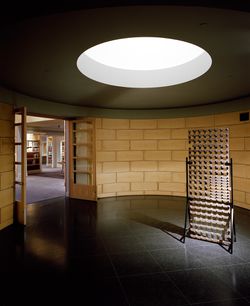
Cette exposition explore l’idée du pénitencier qui, au XIXe siècle, s’est frayée un chemin dans les consciences et les territoires d’Europe et d’Amérique du Nord. S’inspirant de la tendance rationaliste en architecture et des principes sociaux posés au XVIIIe siècle, les partisans de la prison se sont attachés à une claire géométrie de l’isolement, de la surveillance et(...)
Cette exposition explore l’idée du pénitencier qui, au XIXe siècle, s’est frayée un chemin dans les consciences et les territoires d’Europe et d’Amérique du Nord. S’inspirant de la tendance rationaliste en architecture et des principes sociaux posés au XVIIIe siècle, les partisans de la prison se sont attachés à une claire géométrie de l’isolement, de la surveillance et(...)
Localisation:
Vitrines
Vitrines
Date:
8 novembre 1995 au 31 mai 1996
8 novembre 1995 au 31 mai 1996
Titre:
L’idée du pénitencier
Actions:
Description:
Cette exposition explore l’idée du pénitencier qui, au XIXe siècle, s’est frayée un chemin dans les consciences et les territoires d’Europe et d’Amérique du Nord. S’inspirant de la tendance rationaliste en architecture et des principes sociaux posés au XVIIIe siècle, les partisans de la prison se sont attachés à une claire géométrie de l’isolement, de la surveillance et(...)
L’idée du pénitencier
Actions:
Description:
Cette exposition explore l’idée du pénitencier qui, au XIXe siècle, s’est frayée un chemin dans les consciences et les territoires d’Europe et d’Amérique du Nord. S’inspirant de la tendance rationaliste en architecture et des principes sociaux posés au XVIIIe siècle, les partisans de la prison se sont attachés à une claire géométrie de l’isolement, de la surveillance et(...)
Classification:
expositions
expositions
Date:
8 novembre 1995 au
31 mai 1996
8 novembre 1995 au
31 mai 1996
Localisation:
Vitrines
Vitrines
Classification:
expositions
expositions
Actions:
Description:
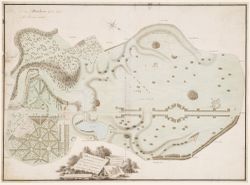
Les jardins de Grande-Bretagne et leurs bâtiments ont joué un rôle important dans l’art et la culture britanniques au cours des quatre derniers siècles, et ils ont influencé les architectes et architectes paysagistes d’Europe et d’Amérique du Nord. L’exposition Une Arcadie anglaise, 1600-1990 rassemble des documents sur l’histoire de ces jardins et bâtiments. Les 125(...)
Les jardins de Grande-Bretagne et leurs bâtiments ont joué un rôle important dans l’art et la culture britanniques au cours des quatre derniers siècles, et ils ont influencé les architectes et architectes paysagistes d’Europe et d’Amérique du Nord. L’exposition Une Arcadie anglaise, 1600-1990 rassemble des documents sur l’histoire de ces jardins et bâtiments. Les 125(...)
Localisation:
Salles principales
Salles principales
Date:
12 février 1992 au 19 avril 1992
12 février 1992 au 19 avril 1992
Titre:
Une arcadie anglaise, 1600-1990 : jardins et bâtiments sous la garde du National Trust avec des œuvres tirées des collections du CCA
Actions:
Description:
Les jardins de Grande-Bretagne et leurs bâtiments ont joué un rôle important dans l’art et la culture britanniques au cours des quatre derniers siècles, et ils ont influencé les architectes et architectes paysagistes d’Europe et d’Amérique du Nord. L’exposition Une Arcadie anglaise, 1600-1990 rassemble des documents sur l’histoire de ces jardins et bâtiments. Les 125(...)
Une arcadie anglaise, 1600-1990 : jardins et bâtiments sous la garde du National Trust avec des œuvres tirées des collections du CCA
Actions:
Description:
Les jardins de Grande-Bretagne et leurs bâtiments ont joué un rôle important dans l’art et la culture britanniques au cours des quatre derniers siècles, et ils ont influencé les architectes et architectes paysagistes d’Europe et d’Amérique du Nord. L’exposition Une Arcadie anglaise, 1600-1990 rassemble des documents sur l’histoire de ces jardins et bâtiments. Les 125(...)
Classification:
expositions
expositions
Date:
12 février 1992 au
19 avril 1992
12 février 1992 au
19 avril 1992
Localisation:
Salles principales
Salles principales
Classification:
archives
Niveau de description archivistique:
Fonds
archives
Niveau de description archivistique:
Fonds
Numéro de référence:
AP189
Résumé:
L’installation Météorologie d’intérieur fut présentée au Centre Canadien d’Architecture (CCA) lors de l’exposition Environ(ne)ment (18 octobre 2006-10 juin 2007) et à Rovereto en Italie lors de l’exposition Manifesta 7 (19 juillet-2 novembre 2008). Les documents d’archives de l’installation comprennent le logiciel développé pour l’installation et une sélection des objets installés dans les deux espaces d’exposition. *** The installation Interior Weather was presented at the Candian Centre for Architecture (CCA) as part of the exhibition Environ(ne)ment (October 18, 2006-June 10, 2007) and in Rovereto, Italy as part of Manifesta 7 (July 19-November 2, 2008). The records of the installation Interior Weather include the software developed for the installation and a selection of objects installed in the exhibition spaces.
AP189
Résumé:
L’installation Météorologie d’intérieur fut présentée au Centre Canadien d’Architecture (CCA) lors de l’exposition Environ(ne)ment (18 octobre 2006-10 juin 2007) et à Rovereto en Italie lors de l’exposition Manifesta 7 (19 juillet-2 novembre 2008). Les documents d’archives de l’installation comprennent le logiciel développé pour l’installation et une sélection des objets installés dans les deux espaces d’exposition. *** The installation Interior Weather was presented at the Candian Centre for Architecture (CCA) as part of the exhibition Environ(ne)ment (October 18, 2006-June 10, 2007) and in Rovereto, Italy as part of Manifesta 7 (July 19-November 2, 2008). The records of the installation Interior Weather include the software developed for the installation and a selection of objects installed in the exhibition spaces.
Personnes et institutions:
Date:
2000-2008
2000-2008
Titre:
Documents d'archives de l'installation "Météorologie d'intérieur" de Philippe Rahm
Actions:
AP189
Résumé:
L’installation Météorologie d’intérieur fut présentée au Centre Canadien d’Architecture (CCA) lors de l’exposition Environ(ne)ment (18 octobre 2006-10 juin 2007) et à Rovereto en Italie lors de l’exposition Manifesta 7 (19 juillet-2 novembre 2008). Les documents d’archives de l’installation comprennent le logiciel développé pour l’installation et une sélection des objets installés dans les deux espaces d’exposition. *** The installation Interior Weather was presented at the Candian Centre for Architecture (CCA) as part of the exhibition Environ(ne)ment (October 18, 2006-June 10, 2007) and in Rovereto, Italy as part of Manifesta 7 (July 19-November 2, 2008). The records of the installation Interior Weather include the software developed for the installation and a selection of objects installed in the exhibition spaces.
Documents d'archives de l'installation "Météorologie d'intérieur" de Philippe Rahm
Actions:
AP189
Résumé:
L’installation Météorologie d’intérieur fut présentée au Centre Canadien d’Architecture (CCA) lors de l’exposition Environ(ne)ment (18 octobre 2006-10 juin 2007) et à Rovereto en Italie lors de l’exposition Manifesta 7 (19 juillet-2 novembre 2008). Les documents d’archives de l’installation comprennent le logiciel développé pour l’installation et une sélection des objets installés dans les deux espaces d’exposition. *** The installation Interior Weather was presented at the Candian Centre for Architecture (CCA) as part of the exhibition Environ(ne)ment (October 18, 2006-June 10, 2007) and in Rovereto, Italy as part of Manifesta 7 (July 19-November 2, 2008). The records of the installation Interior Weather include the software developed for the installation and a selection of objects installed in the exhibition spaces.
Classification:
archives
Niveau de description archivistique:
Fonds
archives
Niveau de description archivistique:
Fonds
Date:
2000-2008
2000-2008
Personnes et institutions:
Classification:
événements
événements
Actions:
Description:
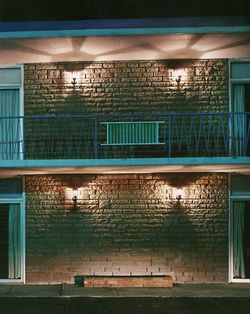
Barbara Penner, historienne de l’architecture, retrace l’évolution des Chutes du Niagara, de leur statut de destination phare pour jeunes mariés au XIXe siècle à celui d’icône postindustrielle kitsch, avant de redevenir la destination par excellence des jeunes mariés. Le photographe Alec Soth, dont les travaux constituent l’amorce de cette causerie présentée par Barbara(...)
Barbara Penner, historienne de l’architecture, retrace l’évolution des Chutes du Niagara, de leur statut de destination phare pour jeunes mariés au XIXe siècle à celui d’icône postindustrielle kitsch, avant de redevenir la destination par excellence des jeunes mariés. Le photographe Alec Soth, dont les travaux constituent l’amorce de cette causerie présentée par Barbara(...)
Localisation:
Théâtre Paul-Desmarais
Théâtre Paul-Desmarais
Date:
23 avril 2009
23 avril 2009
Titre:
L'enseignement de... Niagara Falls
Actions:
Description:
Barbara Penner, historienne de l’architecture, retrace l’évolution des Chutes du Niagara, de leur statut de destination phare pour jeunes mariés au XIXe siècle à celui d’icône postindustrielle kitsch, avant de redevenir la destination par excellence des jeunes mariés. Le photographe Alec Soth, dont les travaux constituent l’amorce de cette causerie présentée par Barbara(...)
L'enseignement de... Niagara Falls
Actions:
Description:
Barbara Penner, historienne de l’architecture, retrace l’évolution des Chutes du Niagara, de leur statut de destination phare pour jeunes mariés au XIXe siècle à celui d’icône postindustrielle kitsch, avant de redevenir la destination par excellence des jeunes mariés. Le photographe Alec Soth, dont les travaux constituent l’amorce de cette causerie présentée par Barbara(...)
Classification:
événements
événements
Date:
23 avril 2009
23 avril 2009
Localisation:
Théâtre Paul-Desmarais
Théâtre Paul-Desmarais
Niveau de description archivistique:
Projet
Projet
Titre:
Westpen
Westpen
Numéro de référence:
AP144.S2.D101
Description:
File documents an unexecuted project for Westpen, an animal enclosure for the property at West Green House at Hartley Wintney, in Hampshire, England, and also the location for the project Greenbird (AP144.S2.D96). The pen can be adapted for several uses and its pivoting and sliding gates can be removed when not used for livestock, to be converted into a sculptured landscape for picnicking and leisure activities. Conceptual drawings include diagrammatic sketches which show the movement of animals through the pen for collecting, weighing, cleaning, and shearing. Sketches show pivoting rails, and preliminary plans are annotated with individual gate dimensions. Design development and working drawings illustrate the development of the pen components: 8 ft swing slide and cattle gates; 3 ft sheep gates; a sheep dip and footbath area; a sheep drafting and guillotine gate; and feed bins. Plans and details show the concrete apron and pre-formed gate sockets. Reprographic copies made from a consultant's drawings show the configuration of gates and hurdles. Some material in this file was published in Price-Works II' (London: Architectural Press, 1984), 72, 79. Material in this file was produced between 1977 and 1979. File contains conceptual drawings, design development drawings, model, photographic materials and textual records.
AP144.S2.D101
Description:
File documents an unexecuted project for Westpen, an animal enclosure for the property at West Green House at Hartley Wintney, in Hampshire, England, and also the location for the project Greenbird (AP144.S2.D96). The pen can be adapted for several uses and its pivoting and sliding gates can be removed when not used for livestock, to be converted into a sculptured landscape for picnicking and leisure activities. Conceptual drawings include diagrammatic sketches which show the movement of animals through the pen for collecting, weighing, cleaning, and shearing. Sketches show pivoting rails, and preliminary plans are annotated with individual gate dimensions. Design development and working drawings illustrate the development of the pen components: 8 ft swing slide and cattle gates; 3 ft sheep gates; a sheep dip and footbath area; a sheep drafting and guillotine gate; and feed bins. Plans and details show the concrete apron and pre-formed gate sockets. Reprographic copies made from a consultant's drawings show the configuration of gates and hurdles. Some material in this file was published in Price-Works II' (London: Architectural Press, 1984), 72, 79. Material in this file was produced between 1977 and 1979. File contains conceptual drawings, design development drawings, model, photographic materials and textual records.
Personnes et institutions:
Date:
1977-1979
1977-1979
Titre:
Westpen
Actions:
AP144.S2.D101
Description:
File documents an unexecuted project for Westpen, an animal enclosure for the property at West Green House at Hartley Wintney, in Hampshire, England, and also the location for the project Greenbird (AP144.S2.D96). The pen can be adapted for several uses and its pivoting and sliding gates can be removed when not used for livestock, to be converted into a sculptured landscape for picnicking and leisure activities. Conceptual drawings include diagrammatic sketches which show the movement of animals through the pen for collecting, weighing, cleaning, and shearing. Sketches show pivoting rails, and preliminary plans are annotated with individual gate dimensions. Design development and working drawings illustrate the development of the pen components: 8 ft swing slide and cattle gates; 3 ft sheep gates; a sheep dip and footbath area; a sheep drafting and guillotine gate; and feed bins. Plans and details show the concrete apron and pre-formed gate sockets. Reprographic copies made from a consultant's drawings show the configuration of gates and hurdles. Some material in this file was published in Price-Works II' (London: Architectural Press, 1984), 72, 79. Material in this file was produced between 1977 and 1979. File contains conceptual drawings, design development drawings, model, photographic materials and textual records.
Westpen
Actions:
AP144.S2.D101
Description:
File documents an unexecuted project for Westpen, an animal enclosure for the property at West Green House at Hartley Wintney, in Hampshire, England, and also the location for the project Greenbird (AP144.S2.D96). The pen can be adapted for several uses and its pivoting and sliding gates can be removed when not used for livestock, to be converted into a sculptured landscape for picnicking and leisure activities. Conceptual drawings include diagrammatic sketches which show the movement of animals through the pen for collecting, weighing, cleaning, and shearing. Sketches show pivoting rails, and preliminary plans are annotated with individual gate dimensions. Design development and working drawings illustrate the development of the pen components: 8 ft swing slide and cattle gates; 3 ft sheep gates; a sheep dip and footbath area; a sheep drafting and guillotine gate; and feed bins. Plans and details show the concrete apron and pre-formed gate sockets. Reprographic copies made from a consultant's drawings show the configuration of gates and hurdles. Some material in this file was published in Price-Works II' (London: Architectural Press, 1984), 72, 79. Material in this file was produced between 1977 and 1979. File contains conceptual drawings, design development drawings, model, photographic materials and textual records.
Niveau de description archivistique:
File 101
File 101
Date:
1977-1979
1977-1979
Personnes et institutions:


